Digital Divide 2.0: Who Gets Access to AI; and Who Doesn’t?
2026-02-28
Digital Divide 2.0: Who Gets Access to AI; and Who Doesn’t?
-Arni Goyal
“Do you have access to AI?”, they ask. And I am like, “Sorry, what? Do you mean to ask whether I have an internet connection?”
Yes, that question simply means what I clarified. And yes, the topic itself says it wrong. That’s the reason this topic was chosen. Because there will be two of many types of people, one would be those who know the actual fact and are here to criticise the blog in the comments, that the topic is all wrong, and others would be the not-so-aware ones (just like I was before reading about this), who are here to actually know the Digital Divide 2.0 and are not aware as of now.
So, coming to the point. Let’s clarify all the confusion that happened above. One of the major differences between Digital Divide 1.0 and Digital Divide 2.0 is that the former one was about whether you have an internet connection, and the latter one is about whether you have the capability. Giving everyone a violin doesn’t make everyone a musician. The world was given AI, but the music sheet wasn’t distributed. And thus in DD 2.0, we are not talking about having access, but we are talking about having the right skills to utilise that technology.
But yes, talking globally, the topic after all isn’t that wrong as well. There is a divide. While the DD 1.0 was binary (online/offline), the DD 2.0 is tiered. Let me break it down into 3 different layers.
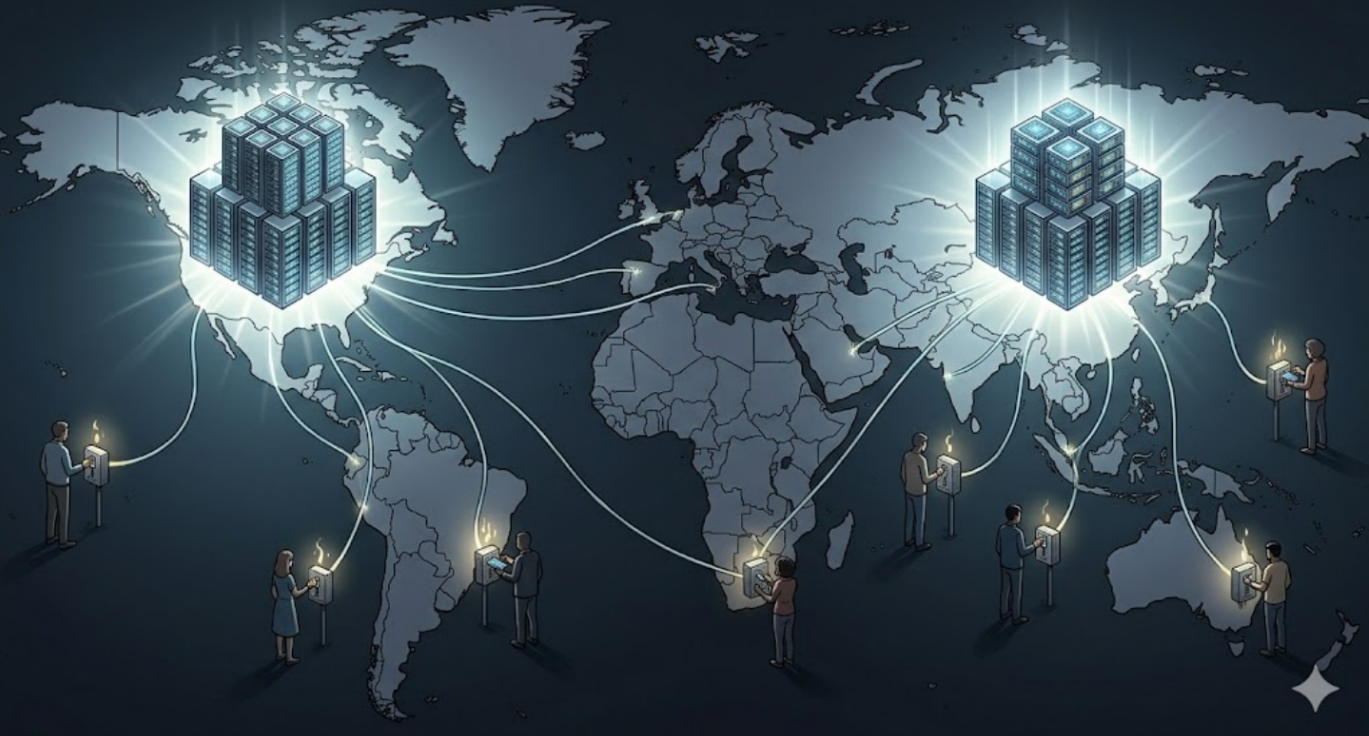
Starting off with the first, we have the hardware gap. Let’s be real, AI isn’t some magic, it runs on physical hardware and electricity. The big servers are present in the global north (USA and China) and thus nearly 86-90% (source: https://epoch.ai/data-insights/ai-supercomputers-performance-share-by-country) compute capacity is controlled by them. And just like business works, developing countries have to pay rent for using the intelligence because they can’t build it. This has caused the birth of a movement called “Sovereign AI”. Countries like India, UAE, and France are trying to build their own data centers so that they aren’t dependent on big tech giants.
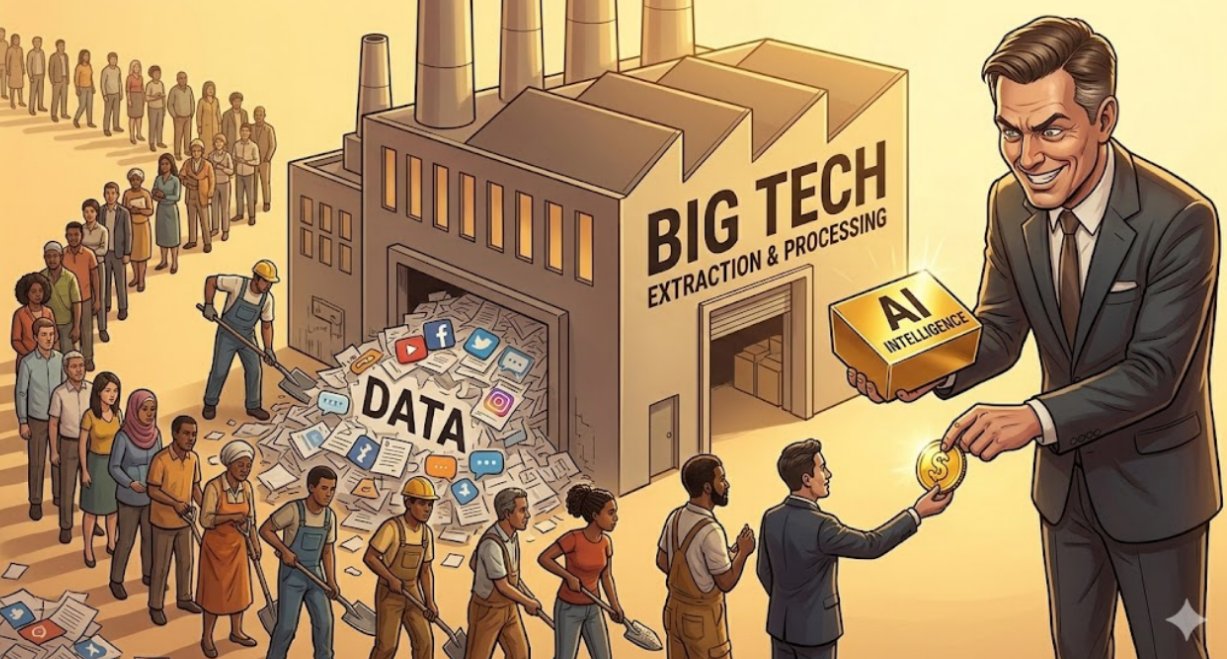
Image Source: gemini.google.com
The next layer that comes into play is the algorithmic bias or the “Language Tax”. This is somewhat related to the technical part. Basically, behind the scenes the AI model processes words in the form of tokens. In English, this method is highly optimizied as 1 word is nearly equal to 1 token, but in languages like Hindi, Burmese etc., 1 word nearly equals 3-4 tokens, just because the model isn’t optimized for those languages. This hidden tax increases the cost of using AI in languages other than English.
The third layer which enters is the “Privacy Premium”. In today’s world privacy has become a luxury item. The large and wealthy firms can easily pay for the “private instances” where their data is not used for training, but normal users and small firms pay with their data. Every prompt, every detail they enter is used for training the chatbot. In short, the rich own their IP and the poor feed the machine.
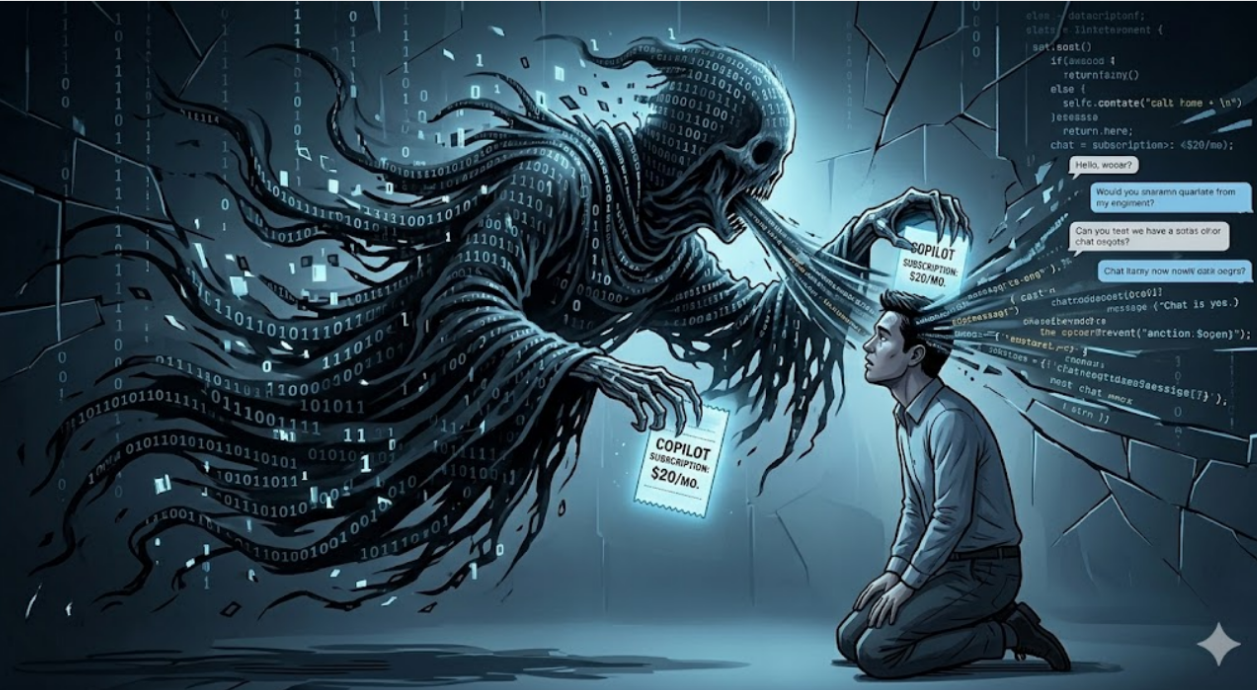
Image Source: gemini.google.com
From these 3 layers it is clearly evident that the divide is not who can access AI and who cannot, but in how they can access. One thing I found nostalgic was the colonialism. Just like in the past, colonial powers purchased raw materials like cotton, indigo and sold back finished products, similarly now big giants are extracting data from the open web and selling back processed intelligence. Capitalism really looked at the 1700s and said, “Let’s do that again, but make it a $20 monthly subscription”.
To wrap this up, I would say that yes all those having internet have access to AI but how much and at what cost is where the division lies. You have money, then feed it to the machine and voila! you can do everything without being worried about which language to use and the safety of your data. But if you don’t, then it depends on many factors including your location, your mother tongue etc. All in all I would say that Digital Divide 2.0 is basically a Dementor's Kiss, but instead of sucking out your soul, they suck out your entire chat history and sell it back to you as a ‘copilot’.